
Three therapies in one wrap sounds like marketing maths -- add features, inflate the price. So I wanted to pull the Alevez Easeflex (sold here as Mendable Knee) apart and look at each mechanism on its own, then see whether stacking them actually adds up to more than the sum of the parts.
My verdict before the biology lesson: the three therapies are real, each does something plausible on its own, and together they produce a warmer, looser, more comfortable knee. That's a genuine effect. What it isn't is the "reverse the damage" cure the sales page implies -- so read this as a mechanism explainer, not a miracle claim.
Here's how I'll run it. I'll take each therapy separately, explain the actual cause-and-effect in plain terms, then look at what happens when they work together. If you want to check the current pricing while you read, you can see the introductory 50%-off offer on the official store. Most of the mendable knee reviews I've seen skip the "how it works" part entirely, so that's exactly where I'm starting.
Infrared Red Light: What It Does and Why It's There
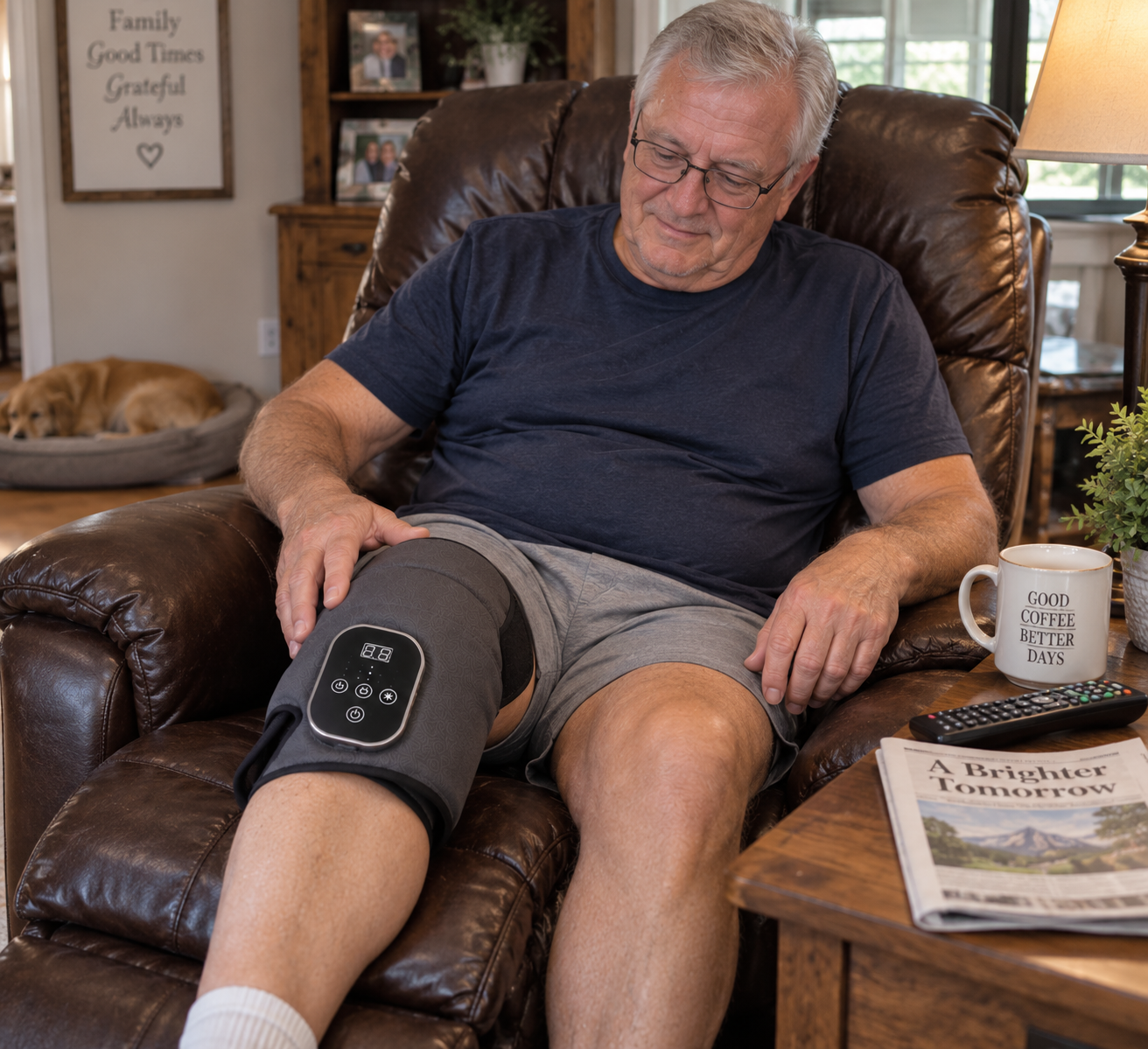
Start with the therapy that confuses people most, because it's the one you can't feel working. Infrared red light therapy is low-level light aimed at the tissue around the joint, and its job is to support the area at a cellular level rather than produce an obvious sensation.
Here's the plain-English version. "Infrared" just means light at a wavelength your eyes can't fully see but your skin registers as gentle warmth. The idea is that this light penetrates a little way into the tissue and encourages the cells there to work more efficiently.
I'll be straight about the evidence gap. The mechanism is plausible and widely used in physio settings, but the Alevez page pushes it as "repairing tissue," which is a bigger claim than a home device can honestly prove. Treat it as gentle supportive warmth-and-light, not a tissue-rebuilding laser.
That candour matters, because it's exactly where the more breathless mendable knee reviews Australia discussions lose the plot. The light is a reasonable inclusion -- just not the headline act.
Heat: Why Warming the Joint Loosens It
Heat is the therapy you'll feel first, and it's the one doing the most obvious work. Warming the joint encourages blood flow to the area, and better blood flow is what makes a stiff knee feel looser.
The cause-and-effect here is simple and well understood. Warmth makes blood vessels widen -- "vasodilation" is the technical word, which just means the pipes open up a bit. More blood moving through means more oxygen and nutrients delivered, and that's what eases the seized-up, stiff sensation.
Think of it like the difference between a cold engine and a warm one. Cold, everything's tight and reluctant; warm, the same parts move freely. Your knee behaves similarly, and this is the mechanism a plain hot-water bottle uses too -- the Alevez just delivers it in a controllable, wearable form.
You get three heat settings, so you start low and step up if it's comfortable. That adjustability is the practical upgrade over a static heat pad. If controllable warmth is the bit you care about most, you can check what's included in the current deal here before deciding.
Vibration Massage: Loosening the Muscles Around the Joint
Vibration is the third mechanism, and it targets the muscles rather than the joint itself. Deep-tissue vibration massage is a buzzing motion that helps loosen and relax the muscles surrounding the knee, which in turn takes some strain off the joint.
The logic runs like this. Tight muscles around a joint pull on it and make everyday movement feel harder. Gentle, repetitive vibration encourages those muscles to relax, much the way a massage therapist's hands would -- just mechanical and consistent rather than human and variable.
There's a secondary effect worth naming. Vibration and the sensation of massage can distract the nervous system from pain signals -- a bit like rubbing your elbow after you knock it, where the rubbing genuinely dulls the ache. It's not curing anything, but the comfort is real.
Like the heat, the vibration runs across three settings, so you can dial the intensity to match how your knee feels on the day.
The Combination Effect: Why Three Beats One
Here's the interesting part -- the therapies overlap toward a single outcome rather than pulling in different directions. Heat opens the blood flow, vibration relaxes the surrounding muscles, and the infrared light adds gentle supportive warmth on top. All three push toward the same result: a warmer, looser, more comfortable knee.
That overlap is what makes the "3-in-1" framing more than a gimmick. In my read of the mechanisms, you're not buying three unrelated gadgets bolted together -- you're getting three complementary approaches to the same problem, delivered in one wireless wrap over a 15-to-30-minute session.
My honest caveat sits right here, though. Complementary comfort mechanisms are believable; "reverse the damage and eliminate chronic pain" is not something this combination can be assumed to do. The realistic promise is symptom relief -- soothing stiffness and soreness -- not structural repair.
If you're managing osteoarthritis, swelling, or a post-surgery recovery, run this past your doctor or physio before adding it in. A massager is a helper alongside proper care, not a replacement for it.
Where This Sits: It's a Therapy Wrap, Not a Support Brace
One mechanism this device deliberately does not have: joint stabilisation. That's the single biggest source of confusion, so it's worth stating plainly -- this is a therapy wrap, not a structural brace.
The distinction is simple. A mendable knee brace, in the way most people picture it, is a rigid support you wear all day under your trousers to hold an unstable joint in place. The Alevez does none of that. You put it on for a session, run the therapies, then take it off.
I've noticed this mismatch drives most of the disappointed mendable knee support reviews floating around. People buy expecting mechanical support and get heat-light-massage instead, then feel short-changed. Sort out which one you actually need first: want stabilisation during activity, look elsewhere; want soothing relief while you rest, this is the right category.
Using the Mechanisms in Practice
Knowing how it works only helps if the thing is easy to use -- and here the design gets out of its own way. The cordless operation means no cable to untangle or power point to hunt for, so the whole setup runs under two minutes.
The one-size-fits-all ergonomic design was the bit I expected to fail, because "fits all" often means "fits none." In practice the wrap secured across a fairly ordinary leg without sliding down mid-session, which is the exact failure I've seen flagged in cheaper wraps.
A practical tip for getting the mechanisms working together: give it the full 15 to 30 minutes, because heat and circulation need a little time to build. A rushed five-minute session shortchanges the very effect you're paying for. You can read verified owner testimonials here if you'd like more voices than mine on what daily use looks like.
What the Mechanisms Can Realistically Deliver
Set your expectations at the right level and you won't be disappointed. The realistic output of these three therapies is modest, cumulative comfort -- a knee that's looser and less sore after each session, with the benefit building over weeks of consistent use rather than arriving in one dramatic hit.
The honest strengths, mechanism-first:
-
Non-invasive and non-addictive -- it works through heat, light and vibration, so there are no side effects to track and no dependency, unlike reaching for painkillers.
-
Three combined therapies in one wrap, so you're not buying a separate heat pad, massager and light unit.
-
Adjustable intensity across three settings, letting you match the therapy to how your knee feels day to day.
The honest limitations, stated just as plainly. Results vary by person and depend heavily on daily use -- skip it for a fortnight and you lose the thread. And the marketing overreaches: "breakthrough" and "reverse the damage" promise repair where the hardware delivers relief.
The safety net that makes it a fair gamble is the 30-day money-back guarantee, backed by 7,500+ verified reviews. Use it as a real trial -- run the therapies daily for a month, and if your knee disagrees with everything I've explained, send it back.
Who the Mechanisms Suit -- and Who They Don't
The therapy design fits some needs cleanly and misses others entirely. Here's the quick sort so you can place yourself in about ten seconds.
-
Best for everyday stiffness and soreness: the heat-and-vibration combination is well matched to creaky, stiff knees that need loosening.
-
Best for a post-activity wind-down: a relaxing session after a walk or a long day on your feet.
-
Best as a thoughtful gift: simple controls and cordless use make it easy for an older parent or grandparent to appreciate.
-
Skip it if you need mechanical stabilisation for a wobbly joint -- the mechanisms here soothe, they don't support.
-
Skip it if you expect it to replace medical treatment, or you can't commit to near-daily use.
The pattern follows the mechanisms. If your goal is warmth, looseness and comfort, the three therapies earn their place. If you need structural support or a genuine medical fix, no combination of heat, light and vibration will get you there.
The Verdict on the Triple Therapy
Break the system into its parts and the picture is clear: heat drives circulation, vibration relaxes the surrounding muscles, and infrared light adds gentle supportive warmth -- three complementary mechanisms aimed at the same modest, honest goal of a more comfortable knee. Combined in one cordless wrap over a short daily session, they do that job without drama.
The recap for anyone who scrolled straight down:
-
3-in-1 therapy -- infrared red light, adjustable heat, and deep-tissue vibration massage in one wrap.
-
Three heat and vibration settings, fully wireless, one-size-fits-all ergonomic fit.
-
15–30 minutes of daily use, aimed at stiffness, swelling, soreness, and gentle recovery.
-
Non-invasive and non-addictive, backed by a 30-day money-back guarantee and 7,500+ reviews.
My only real quibble is the same one that runs through the whole mendable knee Australia conversation: the marketing promises repair where the mechanisms deliver relief. Judge it on the therapy -- warmth, looseness, comfort -- treat daily consistency as the price of admission, and don't mistake it for a support brace. If gentle, mechanism-backed relief for sore knees is what you're after, claim the current introductory discount on the official store and let the 30-day guarantee run your own test.